

Yen and Yang: Treasury Finds Rare Victory in Japan FX Gambit
August 12, 2026
US Treasury Secretary Scott Bessent's pre-election "3–3–3" agenda - 3% average growth, a 3%-of-GDP deficit and 3 mb/d of additional crude output has proven unachievable. With growth tracking 2%, the deficit entrenched near 6% of GDP, and US oil production likely to plateau around 14 mb/d, Bessent has retreated to smaller ambitions. His latest consolation: orchestrating the first US–Japan currency intervention in 15 years, a coordinated effort to stabilise the yen that simultaneously shores up a wavering ally and reclaims one of his dwindling policy levers.
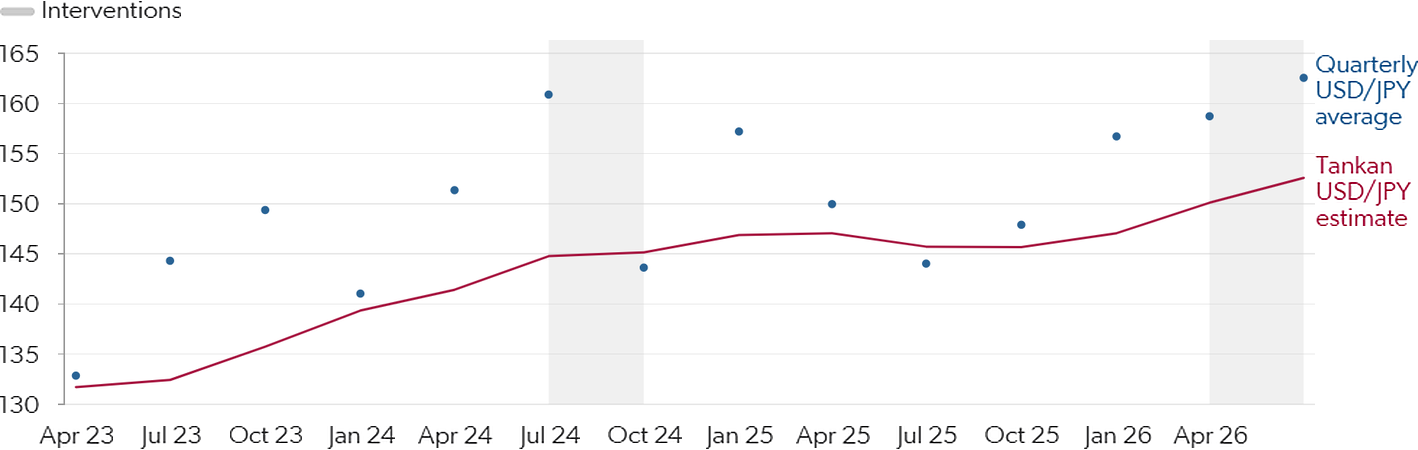
The intervention, underwritten by Fed dollar-for-collateral swaps and diplomatic pressure on the Bank of Japan to quicken its tightening cycle, aims to drive USD/JPY back from 160 towards the high 150s. For Bessent, it is a rare modest victory in an otherwise constrained environment.
Tankan survey Japanese corporate USD/JPY expectations, USD/JPY

Source: Bank of Japan, Energy Aspects
Oil
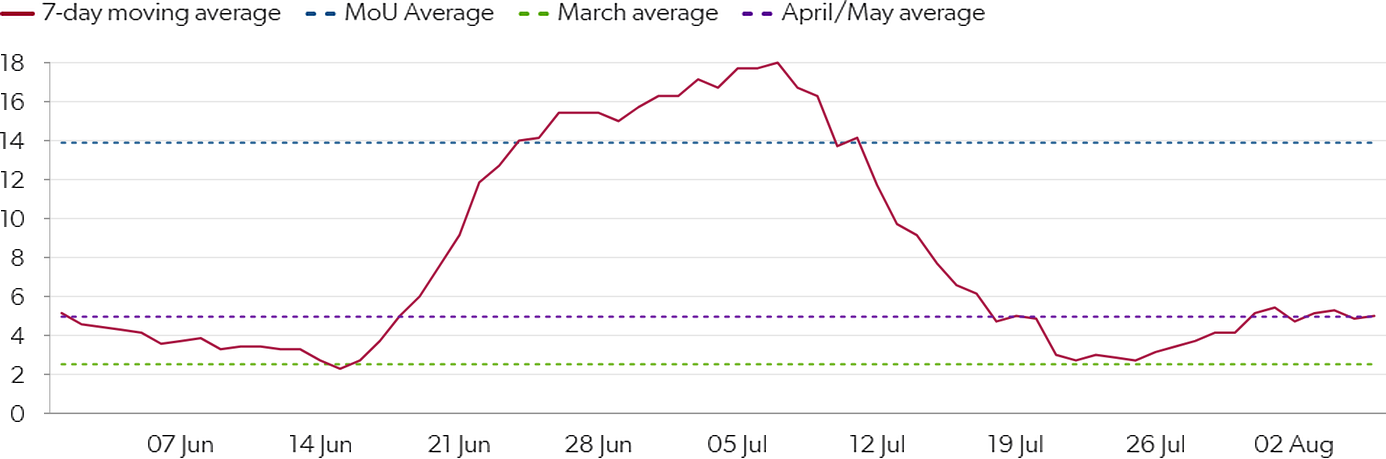
Hormuz loadings have picked up, signalling Middle East producers’ confidence in an imminent deal to resume traffic. However, vessel transits remain subdued, suggesting laden tankers are awaiting formal announcement. While futures will face downward pressure following any deal, contango remains unlikely given recovering Chinese oil demand and strong refining margins.
Houthi threats to Saudi Red Sea flows persist, with the group claiming its eighth attack this week. Since the naval blockade began, Yanbu exports have averaged 3 mb/d, 0.8 mb/d below normal.
Strait of Hormuz vessel transits, #

Note: Transits based on AIS-derived data, including Iran-linked vessels, excl. small tankers;
Source: Energy Aspects
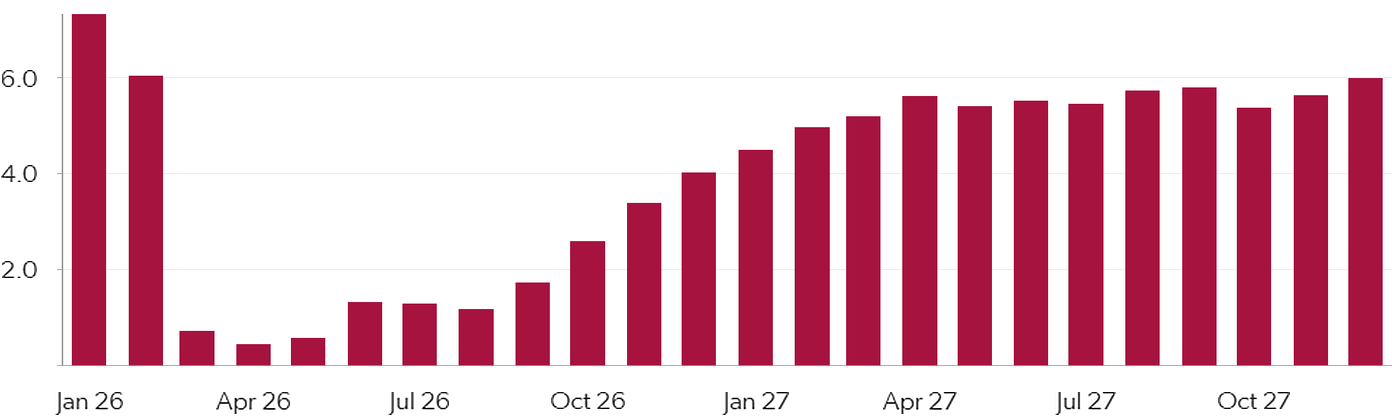
Qatar's LNG disruptions create acute European winter risks. We now forecast Qatari exports recovering to 75% capacity by year-end, then reaching nameplate levels by Q1 27 (excluding damaged trains). As a result, European storage will reach just 69% capacity by October—which could deplete to a critical 10% by end-winter in a colder-than-average weather scenario.
Germany faces particular vulnerability.
This creates pronounced upside price risks for TTF in Q1 27.
Strait of Hormuz vessel transits, #

Source: Energy Aspects
Iran and Oman edge closer to a 60-day Strait of Hormuz management agreement, with a new proposed shipping route potentially unlocking higher transits. But significant obstacles remain, including Iranian demands for upfront sanctions relief. Meanwhile, accelerated Ukrainian drone strikes continue disrupting Russia's refinery recovery, with 17 confirmed strikes in July—the highest on record.
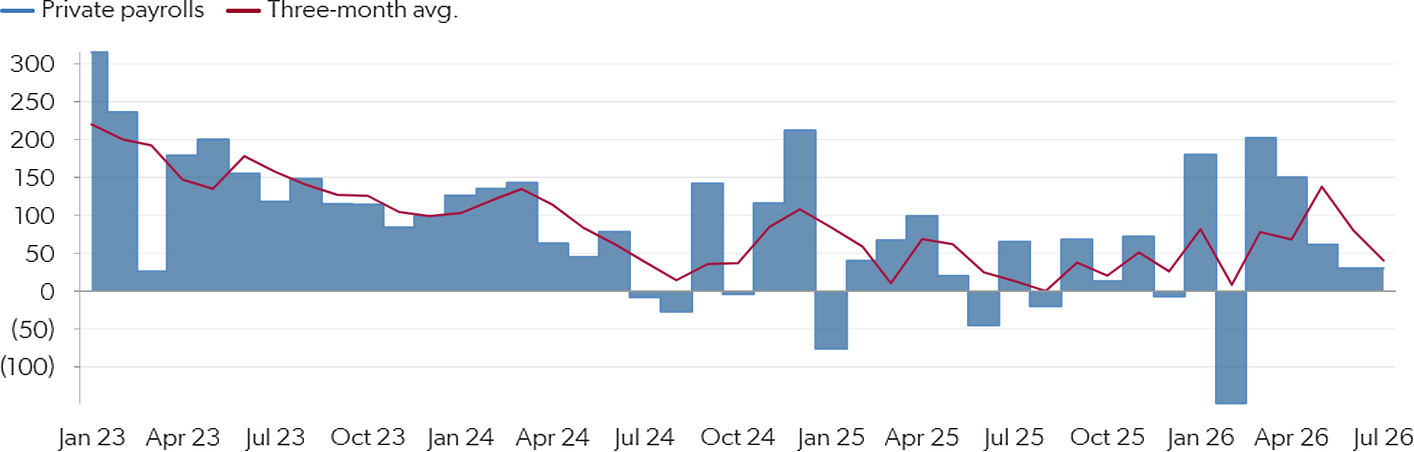
US payroll growth has decelerated sharply, with three-month average private payroll gains falling from 137,000 to 40,000 in July. Despite softer labour data, we have revised our Fed call this week and now expect a 0.25% rate hike in September, following Fed Chair Kevin Warsh's hawkish posturing at July's press conference.
US private payrolls, k m/m

Source: Bureau of Labor Statistics, Energy Aspects
Positioning
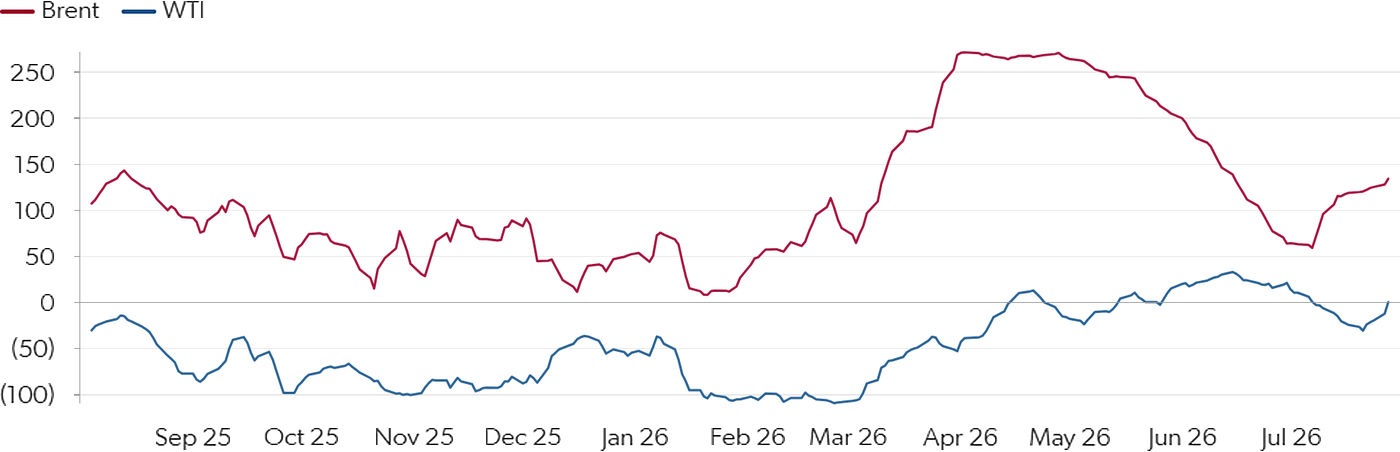
Long dollar positioning has begun unwinding as risk-on sentiment surges and energy prices stabilise. CTAs are covering shorts in multiple currency pairs, with further USD depreciation likely to trigger a flip to long positions. In commodities, directional risk in crude has shifted to options, with call and put open interest surging as traders seek both upside and downside protection.
Discretionary fund position in Brent and WTI, k contracts

Source: CME, ICE, Energy Aspects
This article was first published on LinkedIn. For a deeper dive into this topic and to stay updated with our latest insights, you can access the full newsletter here.