


Tropic thunder: Venezuela oil hype overlooks formidable growth barriers
September 9, 2026
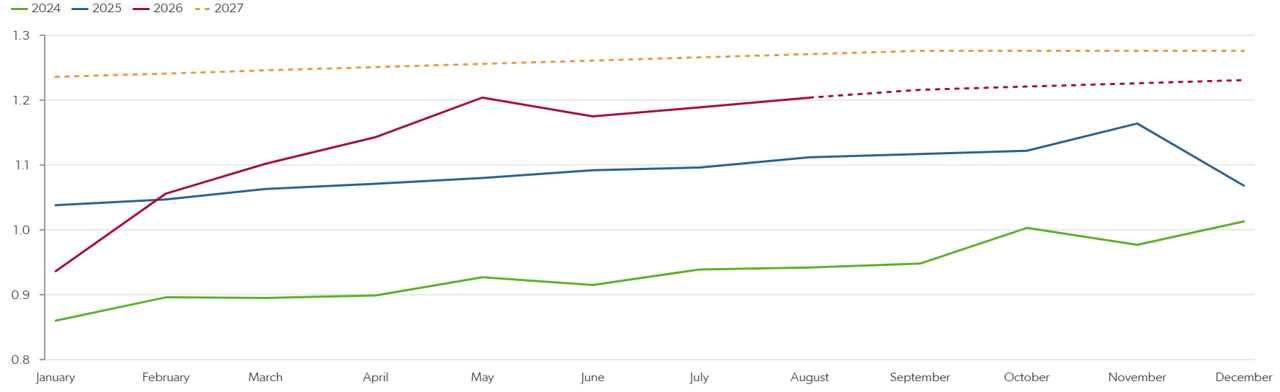
The “historic” Venezuela–US oil deal has generated eye-catching numbers but does little to change our cautious production outlook. The White House claim that the US has secured majority control of 65 billion barrels of Venezuelan reserves has overshadowed Chevron’s commitments to invest $7 billion over five years and double its Venezuela output to 0.6 mb/d.
Details of the deal remain murky, and the US government’s acquisition of a 35% stake in North American Blue Energy Partners has raised questions in Caracas and Washington. Difficult geology, opaque investment rules and Venezuela’s history of expropriation remain formidable barriers to sustained growth.
Venezuelan crude production, mb/d

Source: Energy Aspects
Oil
Brent is approaching $100/bbl following renewed US–Iran strikes. Prices are becoming less responsive to bearish headlines as the inventory buffer that absorbed the initial supply shock disappears. Kayrros data show global crude stocks have drawn by almost 540 mb since the conflict began, including 130 mb in August.
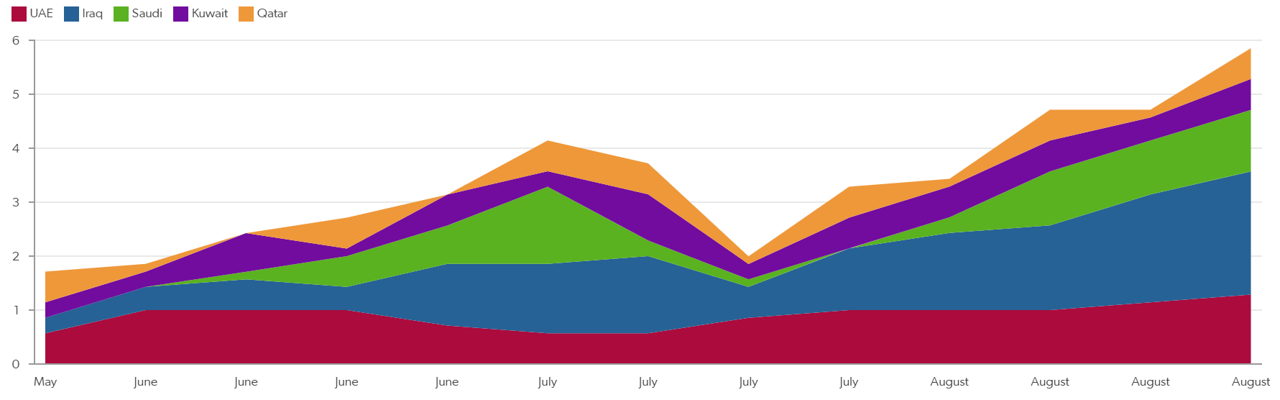
Hormuz crude loadings are easing after reaching a post-conflict high of 5.9 vessels per day last week, a level that lifted estimated flows towards 8 mb/d. Sustaining that pace will be difficult as tanker attacks persist, Iraq withdraws STS offers and vessel availability constrains Saudi exports.
Clean product outflows are recovering only gradually. Diesel cracks are approaching $100/bbl as operational problems at Belgian and Dutch refineries tighten barge supply. Higher Chinese exports will offer limited relief, leaving the market fundamentally tight despite increasingly crowded bullish positioning.
Weekly average satellite-derived crude vessel loadings in Strait of Hormuz, count/day

Source: ESA, Energy Aspects
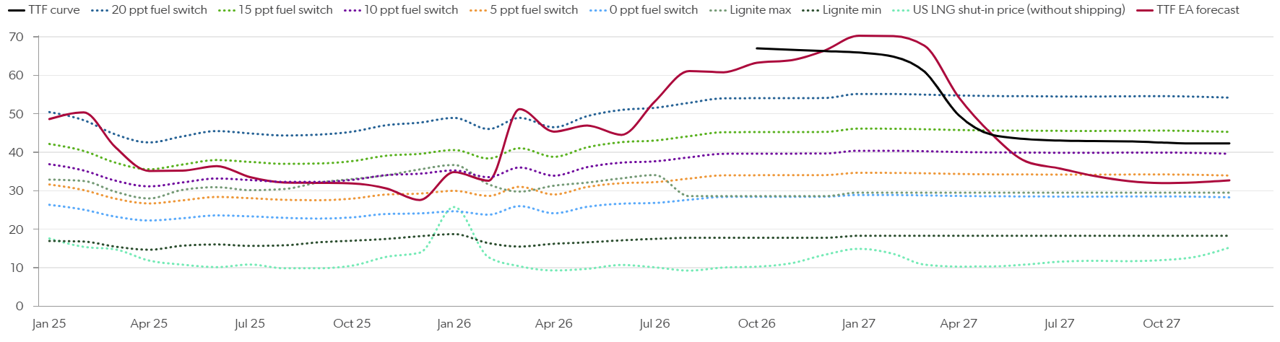
Europe will enter winter with little margin for error. We forecast storage at 76.3 bcm (70%) at end-October and 20.9 bcm (19%) at end-March, both near the bottom of the historical range. Germany is particularly vulnerable, with storage currently at 53% compared with 71% a year ago. State-backed purchases remain possible but are unlikely to match the scale of the 2022 intervention.
Europe–Asia competition for LNG will intensify as heating demand rises. Europe must attract flexible Atlantic basin cargoes, while government support could help Asian buyers remain in the market for longer.
TTF vs coal–gas fuel-switch triggers, €/MWh

Source: ICE, ECB, Energy Aspects
We now expect the Hormuz disruption to persist until year-end, shifting our base case from managed instability to extended conflict. Washington is betting that its blockade and economic pressure will force Tehran to concede before high energy prices become politically untenable. The IRGC, however, may escalate rather than compromise. The key question is whether economic pressure breaks Iran’s resolve before energy prices and market stress force Washington to recalibrate.
Financial markets have entered September in a holding pattern ahead of Fed, European Central Bank and Bank of Japan meetings during 14–18 September. Fed chairman Kevin Warsh’s hawkish Jackson Hole speech strengthened the case for a Fed hike, but internal opposition and upcoming CPI and PPI data mean a September move is not assured.
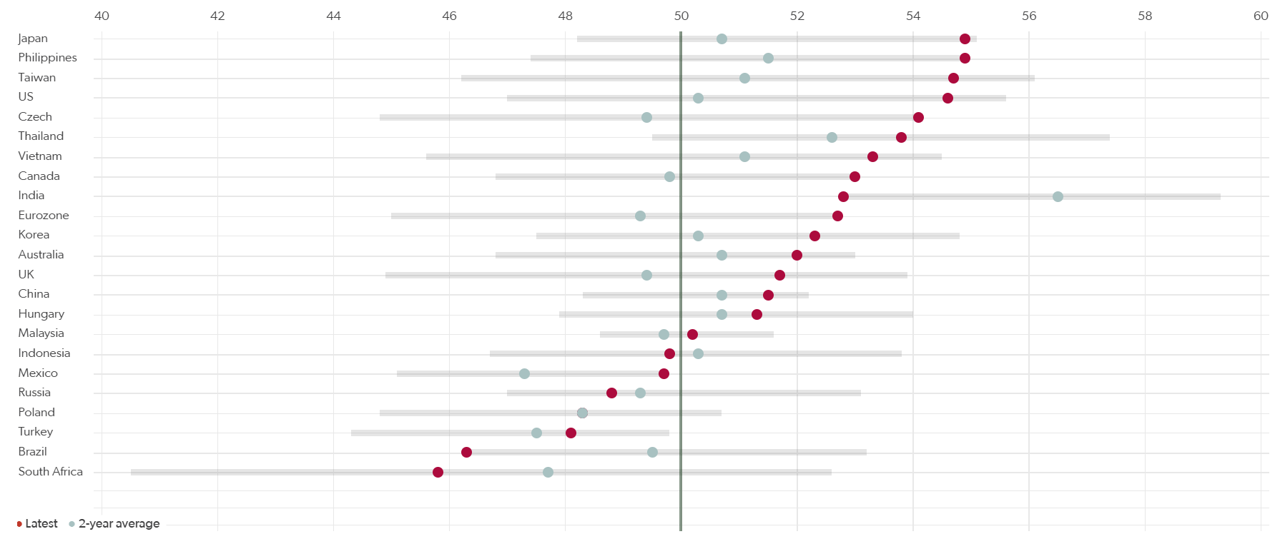
High oil prices and bond yields have yet to derail global activity. Developed-market manufacturing and Asian technology exports are benefiting from data centre investment, while US production is also receiving support from efforts to replenish military stocks. Performance in large energy-consuming emerging markets is weaker. India, South Africa and Turkey have slowed since early 2026 and would bear the earliest economic impact of another crude price spike.
Global manufacturing PMIs, diffusion indices

Source: S&P Global, ISM, Energy Aspects
Positioning
Short-end US rates flows remain dominated by positioning for higher yields following Warsh’s Jackson Hole speech. CTAs are already at or near maximum-short positions across Treasury tenors, which should limit the scope for further systematic selling and cap near-term yield volatility.
Crude positioning is moving in the opposite direction. Short covering in Q4 26 calendar spreads and heavy buying of Q1 27 spreads have pushed holdings above the 80th percentile for this stage of the expiry cycle. With physical balances tightening and bullish conviction building, the risk of an upside crude breakout is increasing.
This article was first published on LinkedIn. For a deeper dive into this topic and to stay updated with our latest insights, you can access the full newsletter here.