Verify, but don’t trust: Ceasefire holds, but Hormuz flows stay muted

April 14, 2026


The US–Iran ceasefire appears to be holding for now after a shaky start, but the process remains fragile. Markets should not become complacent, even as headlines point to a potential new round of negotiations later this week. While both sides are signalling readiness to resume fighting after the ceasefire expires (21 April), regional sources believe they would prefer a diplomatic off-ramp, which may require a further truce extension. 

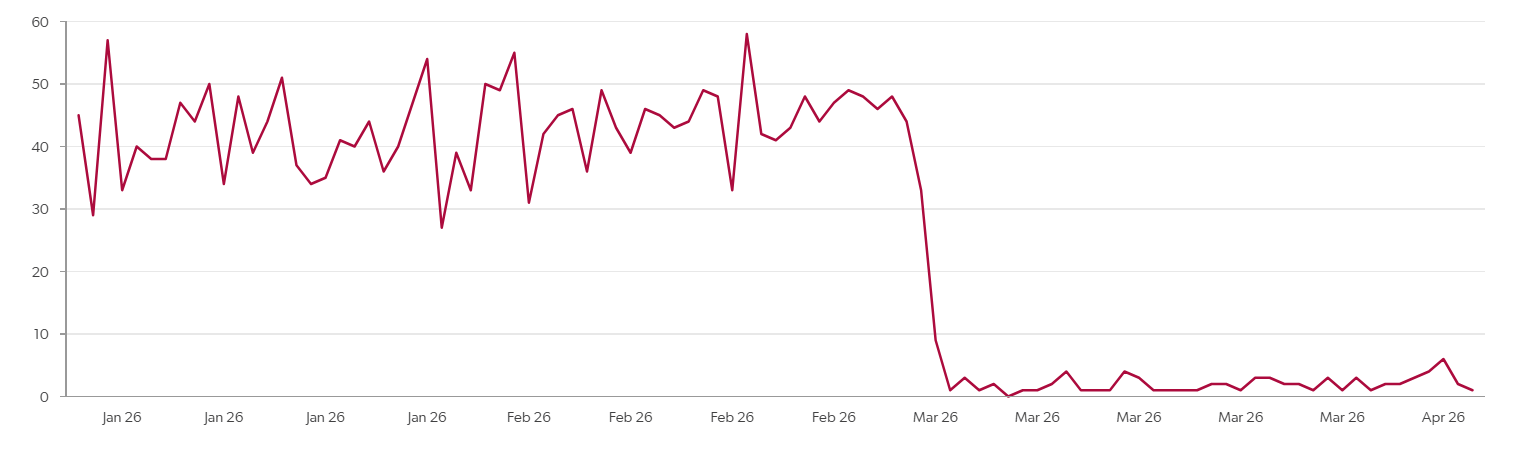
Strait of Hormuz tanker transits, total number of vessels

Strait of Hormuz tanker transits, total number of vessels

Source: OilX, Energy Aspects

Oil


The ceasefire has eased some immediate pressure in oil markets, but physical disruption remains severe. Iran and the US are now in a showdown over the Strait of Hormuz, with US Central Command having begun blockading traffic to and from Iranian ports. Overall, flows through Hormuz remain constrained, and until inbound traffic resumes, upstream production and refinery runs will struggle to recover.


We have cut Middle Eastern crude and condensate production by 10 mb/d in March versus our pre-conflict expectations, with the April shortfall now at 13 mb/d. Saudi Arabia’s confirmation of infrastructure-related capacity losses is a reminder of the precarity of supplies, even as the fighting is suspended.


Refining is also under pressure. We have raised our Iran conflict–related global run cuts to 6.6 mb/d for April and 3.8 mb/d for May and now expect cumulative global clean product supply losses to reach 330 mb by June. We remain constructive across the barrel, with gasoline, gasoil and jet supported by disrupted exports, falling inventories and resilient demand.


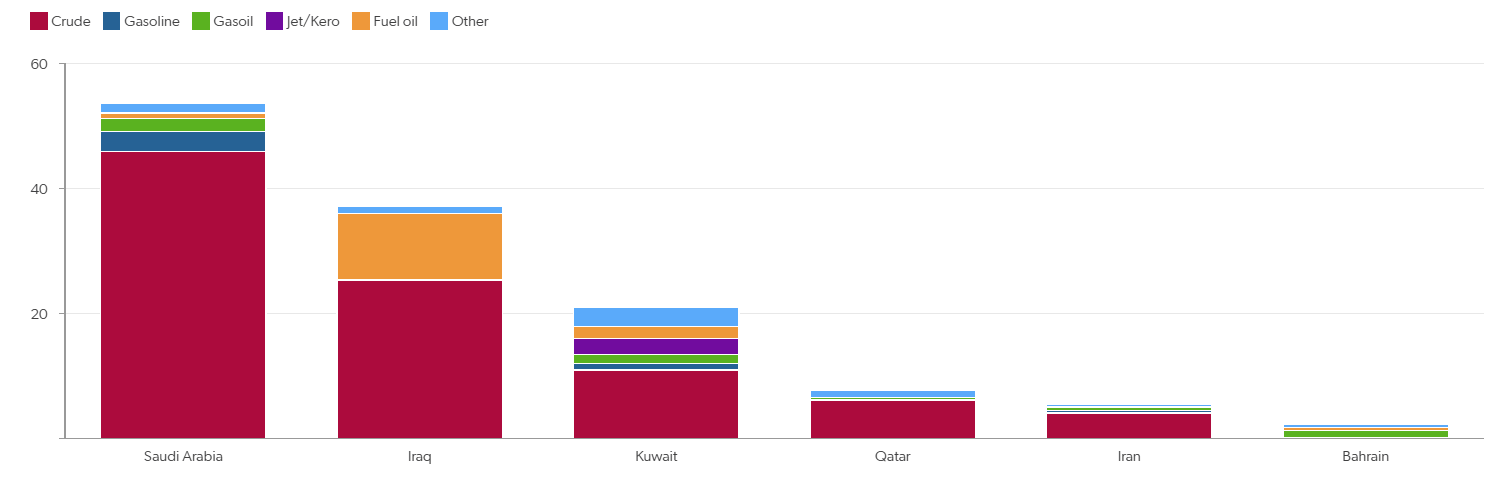
Total oil volumes stranded in the Middle East Gulf by origin country, mb

Total oil volumes stranded in the Middle East Gulf by origin country, mb

Source: Energy Aspects

Gas, power and AI


We view TTF May-26 as broadly fair after last week’s selloff and remain bearish on bal-2026. Asian demand cuts are doing much of the rebalancing, with regional demand this year around 12 Mt below our pre-conflict forecast, helping offset roughly 32 Mt of LNG losses from Hormuz disruptions, damage at Ras Laffan and delays to Qatar’s North Field East expansion.


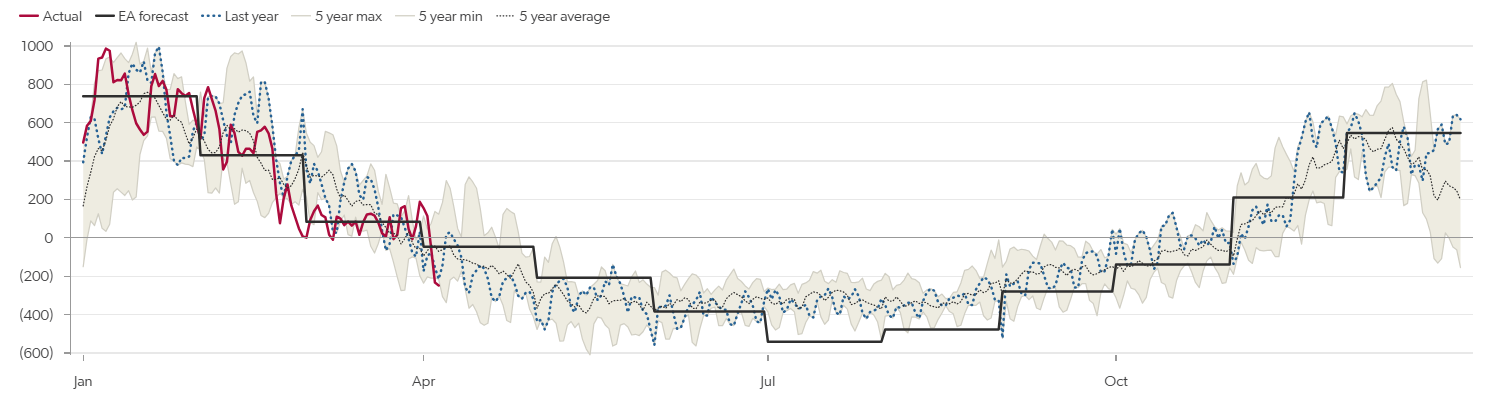
That leaves Europe with more room to refill storage than the market expected. In our base case, with Hormuz transit recovering unevenly in May and Qatari liquefaction improving through the summer, we expect European inventories to reach 94 bcm by end-October, above the threshold needed for winter security.

European net storage withdrawals, mcm/d

European net storage withdrawals, mcm/d

Source: GIE, Energy Aspects

Geopolitics


US-Iran talks in Islamabad failed to reach an agreement, and President Trump announced a blockade on vessels attempting to transit the Strait of Hormuz, as well as plans to interdict any vessels that had paid a toll to Iran. Trump wants to deny Iran the leverage of maintaining its oil exports and some non-oil trade while controlling which other vessels can use the strait.


This will further strain the fragile two-week ceasefire, as a marathon round of talks failed to resolve disagreements over Iran’s uranium stockpiles, control of Hormuz, and the unfreezing of assets. President Trump is clearly losing patience, but Iran has repeatedly rejected US ultimatums, setting the scene for renewed escalation.

Marco


Equities, fixed income and FX are likely to keep taking their cue from crude as markets test the ceasefire. The growing sense that hostilities are ending should support the dollar selloff and the rally in equities and bonds, though gains may fade following the initial relief rally.


FX may see the more durable adjustment. Heavy dollar-buying since the conflict began leaves room for a broader reversal, while equities in Asia and Europe look better placed to rally than the S&P 500. Fixed income is less clear-cut. Central banks are likely to stay cautious, and higher energy prices should keep inflation concerns alive and limit the scope for 10-year Treasury yields to fall below 4%.


This article was first published on LinkedIn. For a deeper dive into this topic and to stay updated with our latest insights, you can access the full newsletter here.

Recent insights

Hormuz transit – exploring the new normal for energy markets
April 20, 2026
Energy Aspects’ latest view on the geopolitical and security backdrop in the Middle East, including how current tensions are affecting supply risk and market pricing
EA 360
April 14, 2026
Energy Aspects launches EA 360, a new platform giving investment professionals independent cross-market intelligence across energy, macro and geopolitics.
Sean Maher- Amrita Sen
April 10, 2026
Amrita Sen caught up with Sean M. Maher at Phillips 66, to discuss the medium-term implications of the Iran conflict for oil markets and global energy balances.