


The case for going nowhere: Rangebound oil could unlock tactical rally
October 14, 2026
Oil markets face substantial upside risks as Iranian tanker attacks intensify, Houthi strikes threaten Saudi energy infrastructure and global crude inventories hover near decade lows.
But what if oil prices simply remain rangebound? Brent futures trading in a $90–100/bbl range through December could be enough to trigger a tactical rally across risk assets, even as physical crude and product prices remain elevated and increasingly diverge from futures.
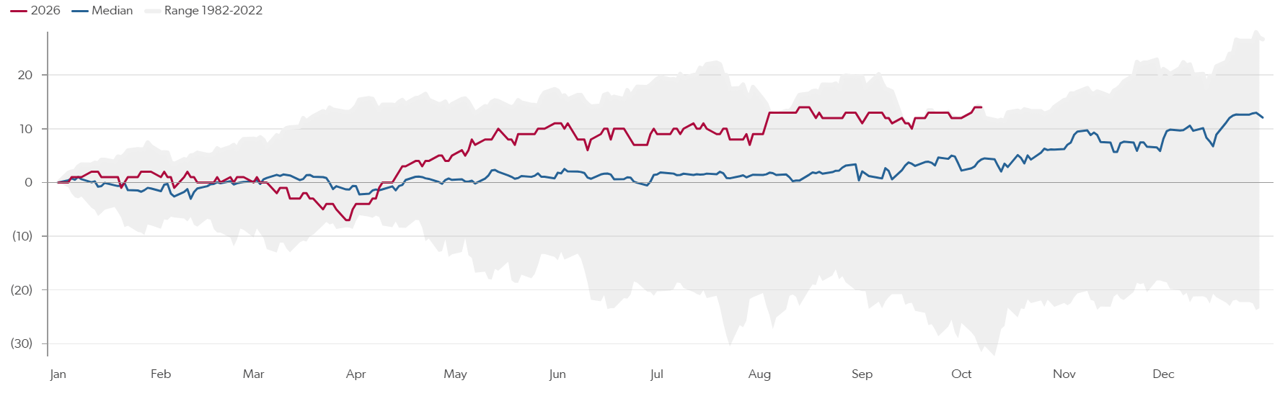
US equities stand to benefit most. The AI boom has masked widespread weakness, with nearly 75% of S&P 500 constituents declining over the past month. Consumer discretionary and industrial stocks have been particularly vulnerable to rising energy costs. A pause in oil’s rally could be enough to lift sentiment and broaden the equity market recovery.
S&P 500 performance in US midterm election years, cumulative %

Source: Bloomberg, Energy Aspects
Oil
Higher Middle East Gulf exports are masking persistent physical tightness. Gulf loadings held at 6.3 vessels per day over 28 September–4 October, keeping crude flows near 11 mb/d but still below pre-war levels. But Iranian attacks could derail momentum.
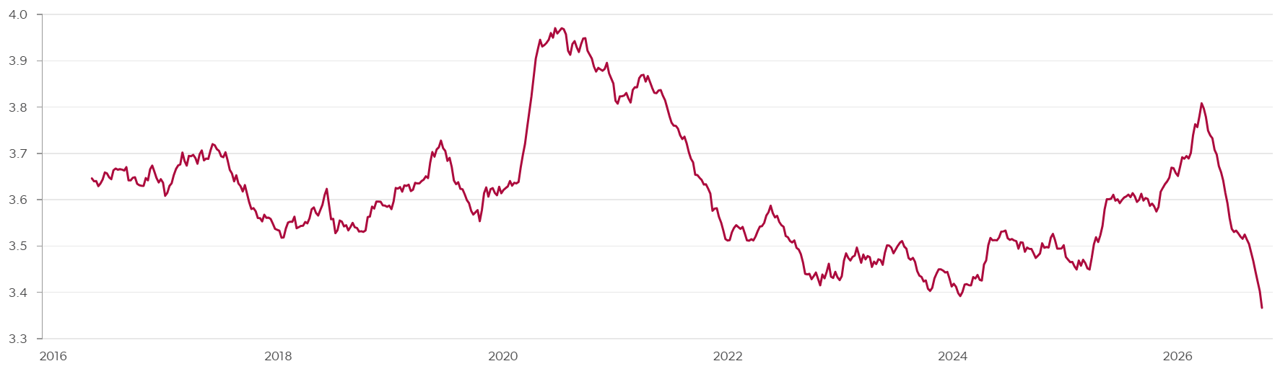
Sky-high freight is reshaping global crude flows, closing long-haul arbitrages and keeping Atlantic basin barrels closer to home. Sustained inventory draws have depleted global crude stocks to decade lows, leaving markets increasingly vulnerable to further disruptions.
Clean product markets are tighter still. The G7’s announced 100 mb emergency stock release offers limited diesel relief, as the headline figure includes crude, previously pledged barrels and volumes already released. Russian refinery disruptions.
Global onshore crude stocks, billion barrels

Source: EIA, Kayrros, Energy Aspects
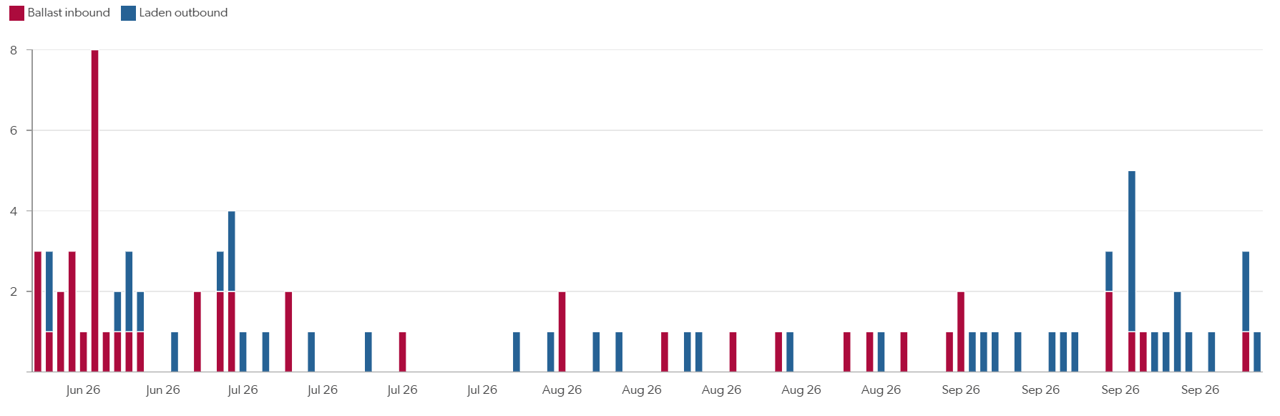
Europe's gas outlook has improved, but the market remains vulnerable to winter supply shocks. Mild weather and stronger storage injections should leave inventories sufficient for a normal winter, although buffers against severe cold remain limited. Europe's continued reliance on LNG makes the recovery in Qatari exports critical, particularly as Iranian attacks threaten shipping through the Strait of Hormuz.
Competition for LNG is set to intensify as Asian heating demand rises, increasing pressure on Europe to attract flexible Atlantic basin cargoes. Meanwhile, US gas markets remain weak in the near term, but record LNG feedgas demand and limited storage flexibility leave Henry Hub increasingly exposed to winter price volatility.
Hormuz LNG transits, # of cargoes

Source: EA LNG cargo tracker, Energy Aspects
The escalating Yemen war is raising risks to Saudi energy infrastructure and exports. Intensifying Houthi strikes on refineries and other facilities threaten to disrupt operations, constrain product exports and potentially force higher imports. Saudi-backed military advances may weaken Houthi control over strategic shipping routes but are unlikely to eliminate the group's long-range strike capabilities.
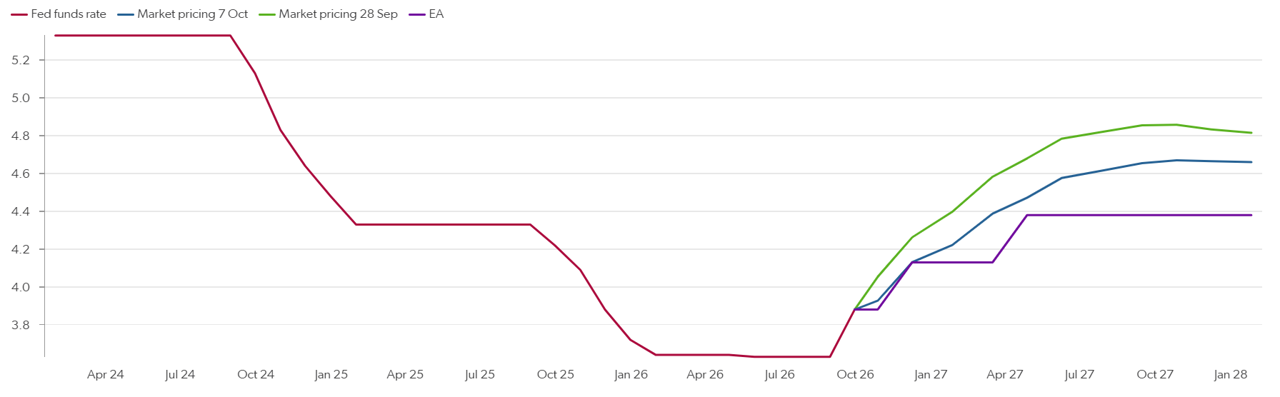
Weakening US labour data have brought markets closer to our Fed outlook. Payroll growth has slowed sharply, with trend gains now closer to 50,000 per month. We expect the Fed to pause in October, although persistently elevated energy costs could sustain inflation pressure and support further tightening into 2027.
The bigger concern is the relentless rise in long-end government bond yields. Both 10-year and 30-year Treasury yields reached new highs despite declining Fed hike expectations. Fiscal concerns, rather than overheating fears, are increasingly driving bond markets, with political uncertainty in France and persistent deficits elsewhere adding pressure.
Fed funds rate and 2027 expectations, %

Source: Energy Aspects
Positioning
Oil markets are increasingly vulnerable to an upside squeeze as investors shift from bullish positions towards cautious shorts. With speculative length substantially reduced, renewed buying from discretionary and trend-following funds could amplify any rally, particularly if geopolitical risks escalate.
European gas positioning looks more balanced. Investors have significantly reduced their bullish exposure, limiting the risk of further forced selling. Trend-following funds are also returning as buyers, although options-related hedging could cap near-term gains.
This article was first published on LinkedIn. For a deeper dive into this topic and to stay updated with our latest insights, you can access the full newsletter here.
Recent Posts