
Renewable methanol
Efforts to utilise methanol as a fuel for transportation have taking place globally since the early 20th century and, until recently, have proven difficult economically. Global efforts are underway to lower the world’s CO2 emissions in creating power, and methanol offers many possible solutions. Markets may be far off these solutions, but commercial interest is continuous. MMSA develops a techno-economic assessment of these markets—please contact MMSA for further details.
From this list, drivers for acetic acid are mostly non-durable and disposable goods (e.g. paints, adhesives, cigarette consumption, aspirin, fibres, plastic bottles).
Vinyl acetate monomer (VAM) and Terephthalic acid (TPA) have played an important role in global acetic acid demand growth. VAM has benefitted from strong consumer demand globally and TPA demand has been accelerating following the growth of polyester demand, primarily for plastic-bottle production but also in fibre applications. The other major consumers of acetic acid also show positive, although slower, growth.
Markets
The charts below break down the regional distribution of acetic acid supply and demand. Asia, led by China, has provided the most demand growth for acetic acid in recent history. This is particularly the case for TPA, as China has been adding significant polyester production capacity to meet rapidly growing demand associated with its WTO participation and is investing upstream in new TPA capacity. Additionally, acetate esters (oxygenated solvents) are growing in China as reductions in chlorinated and hydrocarbon solvents are enacted. Outside Asia, demand growth has been much more moderate, ranging from flat to slightly positive.
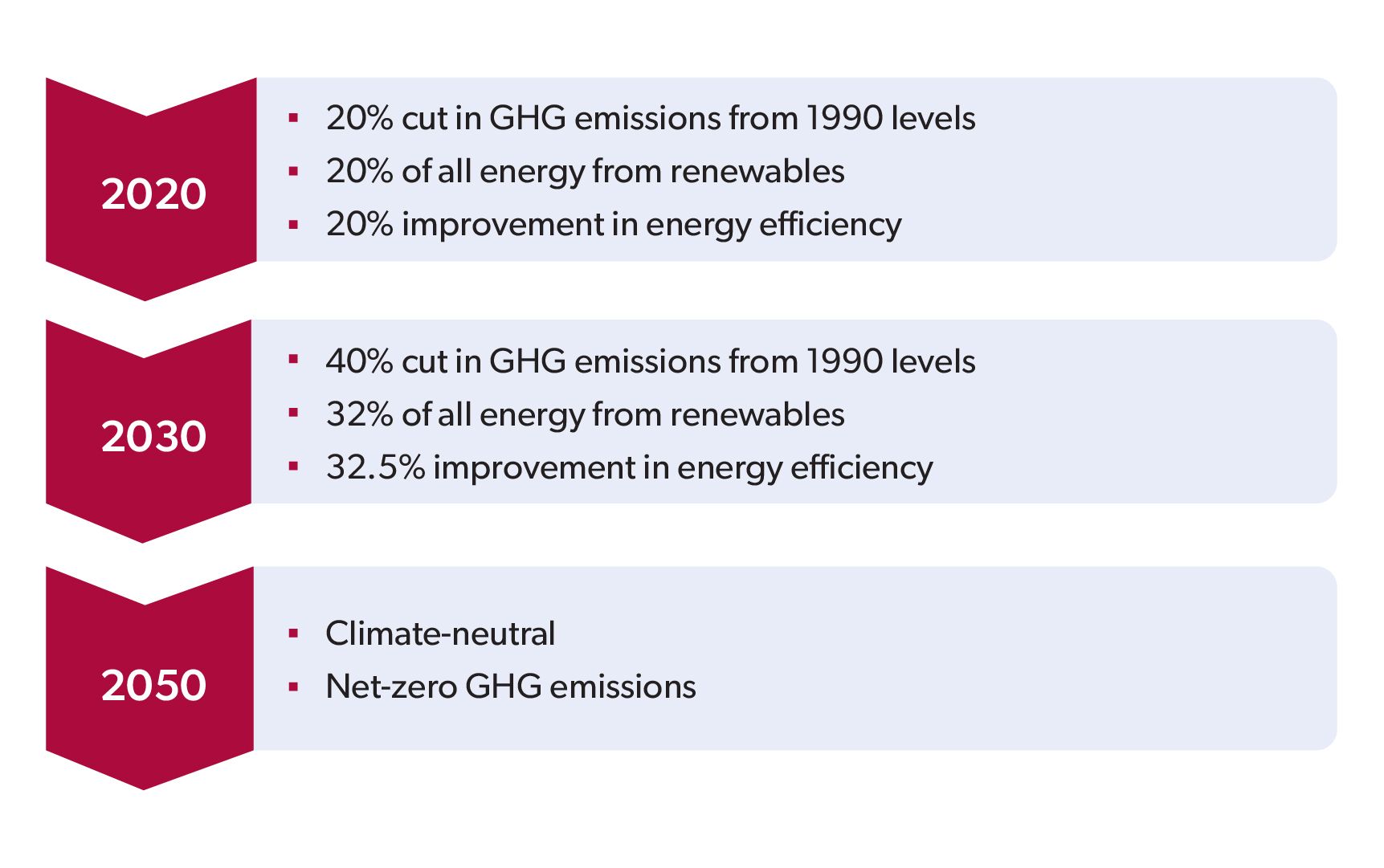
The graphic above summarises a climate-change policy in the EU that seeks “net-zero” GHG emissions. These are collective regional targets with degrees of freedom offered to member states to implement domestic programmes. Transport is the highest CO2-emitting energy sector and various reduction programmes are in place across the EU to meet the overarching goals. Each has a different means of achieving these, with some requiring certain entities to purchase credits for certified fuel types and others mandating the use of these fuels. The US has been focused on the use of a system obligating parties to use lower CO2-intense fuels (Renewable Fuel Standard), with some early efforts (especially in the state of California) to migrate towards an absolute CO2 reduction requirement.
As these regulations evolve, methanol offers many potential solutions. The figure below shows how fuels are currently being used to head towards a carbon-neutral pathway. The fuels move from “first generation” crop-based sources, which, if used exclusively, would create biodiversity risks and competition with food supply, to lower-risk crops, waste and biomass sources and “advanced” fuels. These utilise renewable sources of power to create hydrogen to react with sequestered CO2 to create low-carbon fuels. Methanol can be used across various end-use markets in the form of biomethanol (made from biogas or from biomass), biodiesel (from vegetable oils and animal fats), bioMTBE (from biomethanol and/or bio C4s) and eventually, e-methanol, made from renewable power sources. In fact, methanol can also be used to make “bio” versions of derivatives (olefins, formaldehyde, acetic acid, etc.) depending on regulations and support.
Efforts to utilise methanol as a fuel for transportation have taking place globally since the early 20th century and, until recently, have proven difficult economically. Global efforts are underway to lower the world’s CO2 emissions in creating power, and methanol offers many possible solutions. Markets may be far off these solutions, but commercial interest is continuous. MMSA develops a techno-economic assessment of these markets—please contact MMSA for further details.
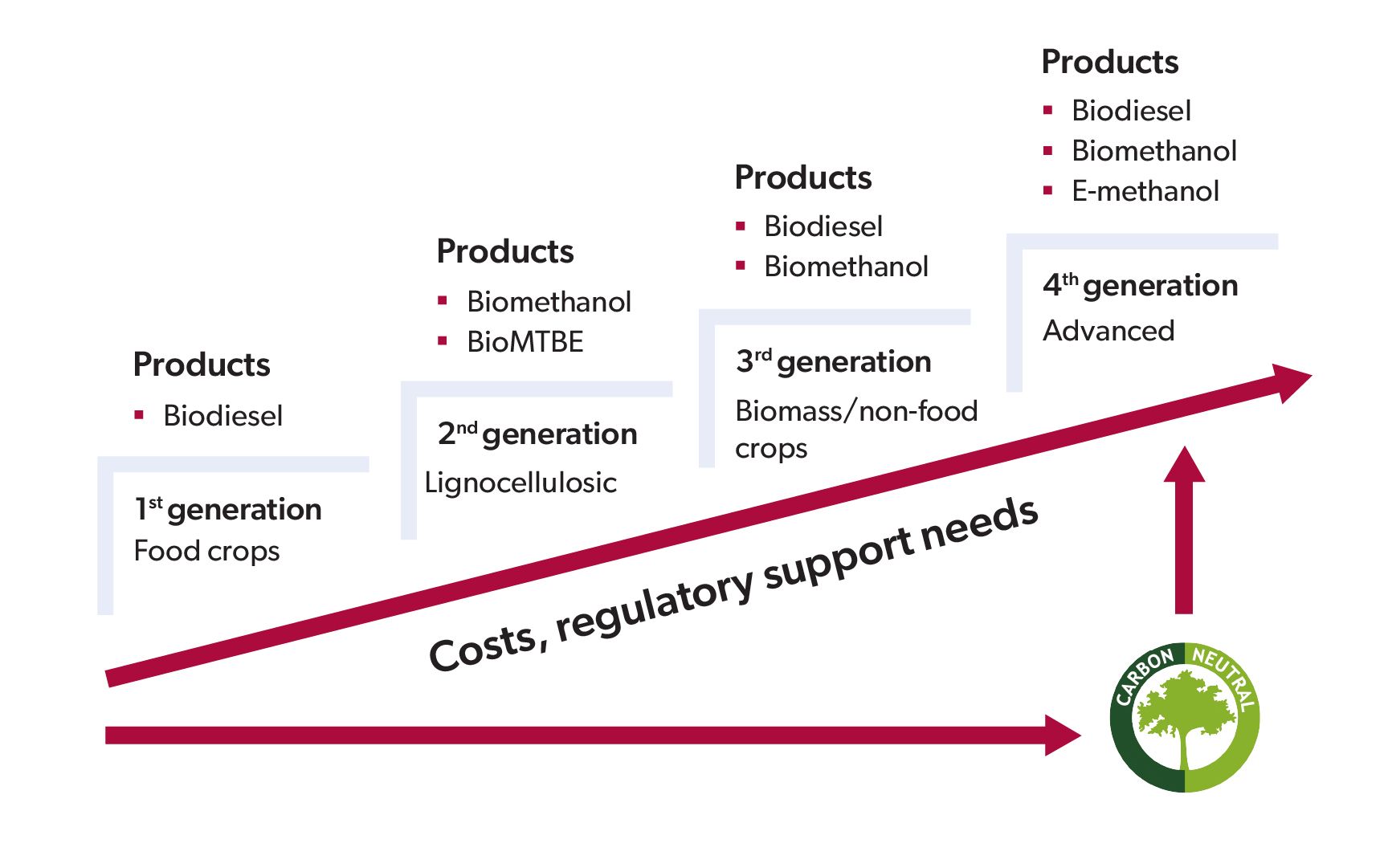
Such fuels are the beginnings of those envisioned by authors of the Methanol Economy (with claimants to that title in both the US and Germany). Theoretically, a “benign cycle” is possible, where we use solar, wind, geothermal, even “safe” nuclear power with methanol as a carrier of hydrogen where necessary, and only small increments of fossil fuels needed to expand methanol supply, only to recover emitted CO2 again using methanol. These markets remain elusive and of questionable (yet potentially massive) market size and will become more costly moving toward the 4th generation.
Recent insights