


EU electrification plan won't lift power demand yet
July 27, 2026
Source: Eurostat, European Commission, Energy Aspects
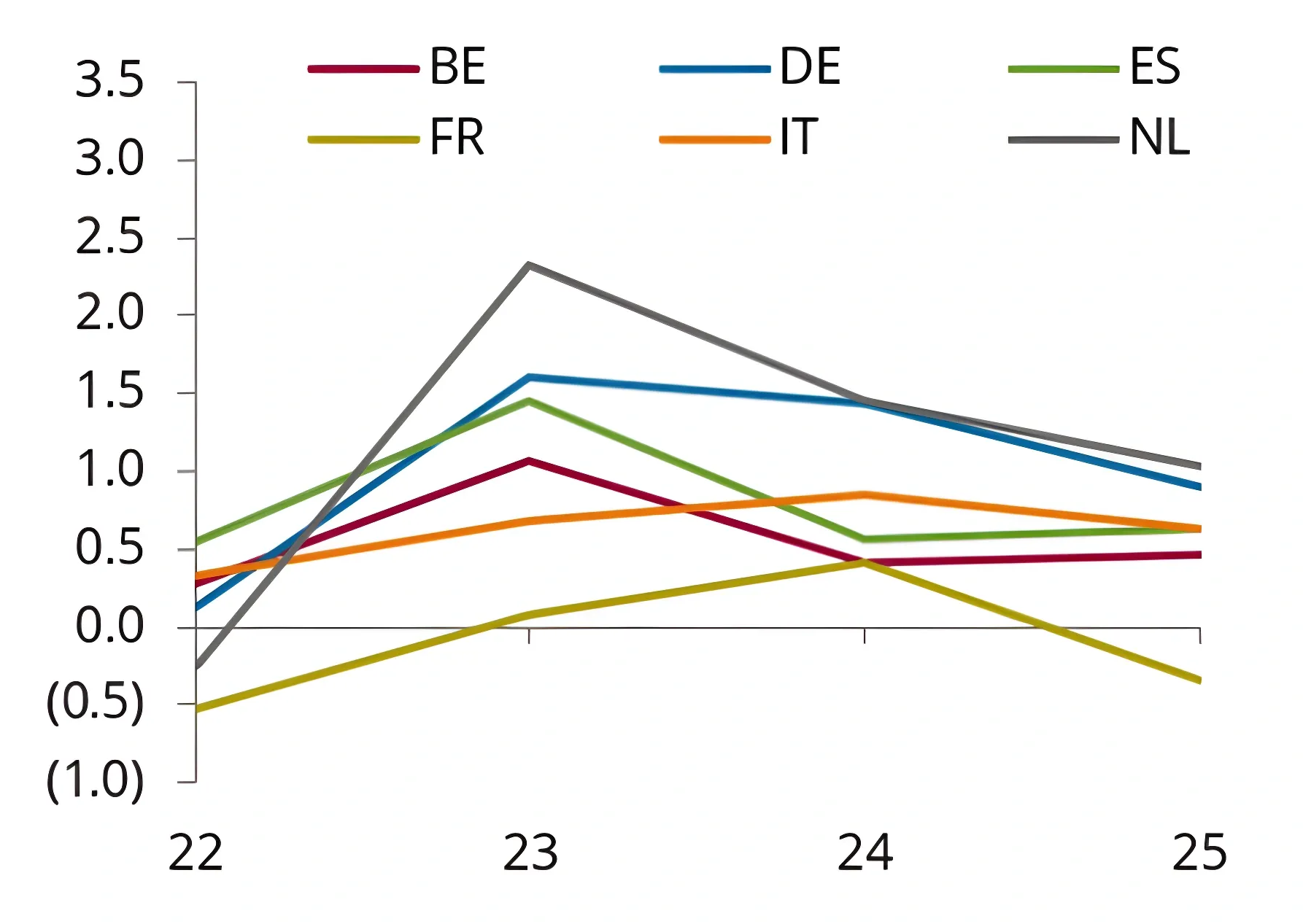
The European Commission published its Electrification Action Plan on 17 July, setting out how it wants electricity to displace gas across European industry, buildings and transport. At Energy Aspects, we have assessed what the plan means for our power-load forecasts, and we do not think it changes much before 2030. Most of its measures are built to shape demand growth in the 2030s, not before it, with the biggest near-term scope for change sitting in industry rather than in homes.
The plan's indicative target is to raise electricity's share of final energy consumption to 46% by 2040, up from around 23% today. The Commission wants that target written into EU law through its Energy Union package, due to be presented in the fourth quarter of 2026, which means the legislative process runs well into 2027. That leaves member states limited time before 2030 to turn the plan's proposals for industry, buildings and transport into concrete measures, beyond what is already enforced or under consideration.
Industry holds the biggest lever, but takes years to pull
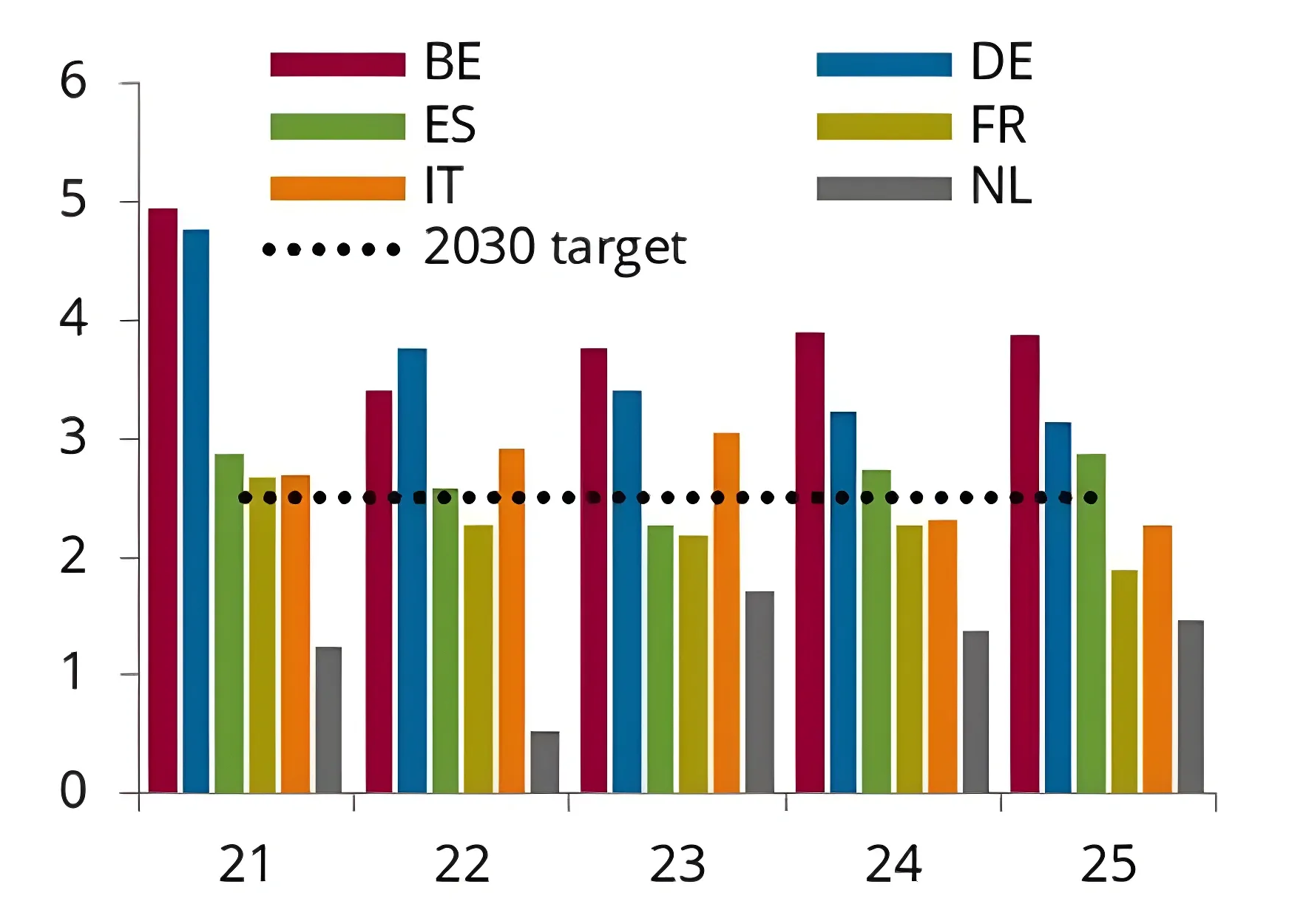
The plan's core mechanism is a lower electricity-to-gas price ratio, meant to make heat pumps, electric vehicles, renewables and small modular reactors more competitive against gas. For industry, the target is a ratio of no more than 2.0 by 2030. In five of the six EU markets we track in granular detail, the ratio still sits above that level, with Germany and the Netherlands highest at 2.93 and Belgium, Italy and Spain around 2.5 to 2.6. The CISAF rules already available to EU member states, and used by Germany and Italy, let member states cut industrial power prices for up to three years until the end of 2030, which should bring their ratios down slightly from 2026.
We already forecast industrial electrification, including hydrogen projects, electric arc furnaces and new semiconductor and battery manufacturing sites, to add 4.9 TWh of power consumption in 2027, rising to 16.8 TWh by 2030. These are projects we have high confidence will be commissioned regardless of the plan. Proposed changes to the EU Emissions Trading System, also presented on 17 July, do not move the picture much before 2030 either: our EUA price forecast for 2027-30 has only shifted modestly, with the larger impact landing after 2030.
Difference of electricity-to-gas price ratio for industry vs EU target, percentage points

Source: Eurostat, European Commission, Energy Aspects
Buildings are already on our forecast trajectory
Faster heat-pump adoption sits at the centre of the plan's approach to buildings, and here our base case is already close to where the Commission wants to go. We forecast residential heat pumps across our six EU markets reaching 20 million by 2030, up from 9.9 million in 2025, with installations more than doubling in Germany, Italy, Spain and the Netherlands, markets where heat pumps do not yet cover a large share of residential heating. That trajectory already meets 86% of the plan's combined target across those markets, which we see as realistic and ambitious rather than something the plan itself needs to unlock.
The household side of the ratio target, a maximum of 2.5, is one most of our markets have already reached or are close to. Belgium, Germany and Spain were still above that level in 2025, but all three have measures under way to close the gap. In Belgium, the Flemish government plans tax changes from 2028 that would cut electricity bills for a typical household by €80/MWh while raising gas bills for higher-consuming households by the same amount; the Flemish region accounts for around 50-60% of total Belgian electricity demand. German electricity grid fees fell by €38/MWh y/y in 2026, backed by €6.5 billion of government funding for grid expansion between 2026 and 2029.
Source: Eurostat, European Commission, Energy Aspects
2.93
Germany
2.80
Netherlands
2.6
Belgium
2.5
Italy & Spain
Spain is phasing down a tax on power generators from 7% to 5% in the second half of 2026 and to 3% in 2027, before removing it entirely from 2028. France cut VAT on air-to-air heat pumps to 5.5% from 20% on 18 July, and our base case already factors in measures like these.
Transport demand was already priced in
The plan also encourages member states to cut VAT on electric vehicles and speed up grid access for new charging points, alongside dynamic electricity tariffs to encourage smart charging. We forecast EVs to add 66.8 TWh to power load across our six EU markets, up from around 27 TWh in 2026, built from separate load profiles for smart home charging, unmanaged home charging and workplace or public charging. Because our base case already assumes strong EV adoption, and because the plan's measures will take time to become binding policy, we do not see much room for EV demand to run materially ahead of what we already forecast.
What this means for the load-growth outlook
None of this means electrification stalls, only that the acceleration the Commission wants lands later than the plan's headlines suggest, largely once the Energy Union package clears negotiation and member states have time to turn targets into rules. Through 2030, our base case already captures most of what a plan like this can realistically add, with industry rather than buildings or transport offering the most room for upward revision.
Policy timelines like this will keep shifting as the Energy Union package moves through negotiation, shifting the load-growth math with each revision.
Our Europe Power service tracks these policy shifts alongside granular, market-by-market demand modelling across the EU's largest power markets. Request a trial to see the full detail behind our forecasts.