


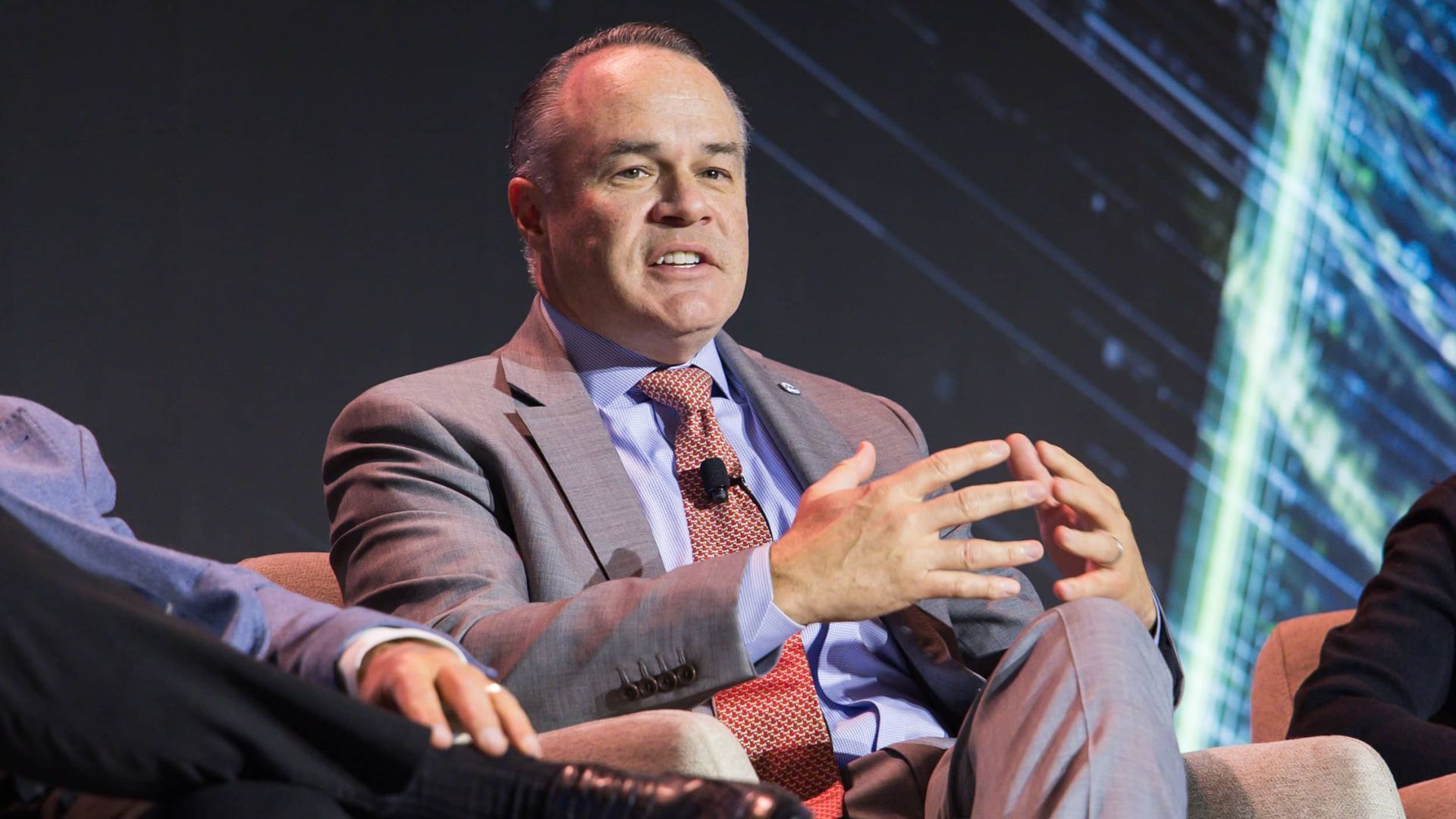




Energy Aspects Conference 2026: The scale and future of the US resource
26 February 2026
Insights in this post are drawn from the session: The U.S. resource – How big is it?, moderated by
Dr. Amrita Sen (Founder and Director of Market Intelligence, Energy Aspects) at the
Energy Aspects Conference 2026.
Key Insights
- The Permian basin is now producing half of the US’s oil and gas, making it the country’s most valuable resource.
- The US holds a vast surplus of natural gas—up to 60 bcf/d—supporting both domestic and global energy security.
- Only a fraction of the US’s estimated 3.5 trillion barrels of oil resources is currently being recovered, with innovation and improved recovery techniques set to unlock further potential.
- Shale economics remain challenging, with $60–65/bbl needed to maintain output and $70+ required for growth.
- AI is driving operational efficiency and meeting rising demand, but infrastructure bottlenecks and regulatory uncertainty persist.
- Continued investment and policy support are essential for the US to maintain its role as a global energy leader.
The U.S. has been the driving force behind global liquids growth for the past 15 years, and the
outlook remains robust. During this session,
Vicki Hollub (CEO, Occidental),
Toby Z. Rice (President and CEO, EQT Corporation),
Scott Sheffield (Founder, Pioneer Natural Resources),
Mike Sommers (CEO, American Petroleum Institute), and
Laura Swett (Chairman, Federal Energy Regulatory Commission)
explored the scale of the U.S. resource base and what it means for the future of energy security.

The Permian basin was described as the best resource the U.S. has ever had, now producing half of the country’s oil and half of its gas. The panel emphasised that
natural gas
is central to both domestic and global energy security, with the U.S. holding a potentially vast surplus — up to 60 bcf/d, still available. As gas-to-oil ratios continue to rise, natural gas output is expected to increase even if oil production remains flat.

Estimates suggest the U.S. holds around 230 billion barrels of conventional oil and 100 billion barrels of
shale oil, with a total resource, including offshore, potentially as high as 3.5 trillion barrels. However, the panel noted that only a fraction of these resources are currently being recovered. Improving recovery rates, particularly from shale, is a priority. Primary production from shale is only around 10–11%, but this can be enhanced through techniques such as CO₂ injection, which could lift recovery to 20%.

The economics of U.S. shale remain challenging. The panel discussed that prices below $55 per barrel would likely see production declines, while $60–65 per barrel is needed to maintain output. To grow and offset declines elsewhere, prices of $70 or more are required. At present, only about 25% of what is produced is being replaced, highlighting the need for continued investment and innovation.

Innovation in drilling and operational productivity has been critical in keeping U.S. energy affordable. The speakers highlighted that American producers are incentivised to keep meeting demand, and that AI is playing an increasingly important role. Not only is AI helping to optimise field operations and extraction efficiency,
but it is also contributing to rising energy demand through the expansion of data centres.

However, infrastructure remains a significant bottleneck. The panel pointed to regulatory uncertainty and red tape as major obstacles, with billions of dollars’ worth of pipeline projects cancelled in recent years. While the current administration has made progress through permitting reform,
further action is needed to ensure sufficient power generation and to maintain consistent policy support for long-term investment.

Looking ahead, the panel expressed optimism about the future of the U.S. energy sector. The country is well positioned to provide energy security globally, and continued advances in technology and recovery techniques, particularly the application of AI, are expected to unlock further potential for the industry.