Acetic Acid


The manufacture of acetic acid consumed 7.3% of the 111.8 million metric tonnes of methanol produced in 2024. Acetic acid is a well-developed intermediate used in several successful commercial chemical processes as both chemical intermediate and solvent. Eventual applications for acetic acid derivatives include latex emulsion resins for paints, adhesives, paper coatings, textile finishing agents, cellulose acetate fibres, cigarette filter tow and cellulosic plastics. It is also found in ocean water, oilfield brines, rain and at trace concentrations in many plant and animal liquids. Acetic acid is central to all biological energy pathways and, in its pure form, is corrosive and characterised by its sharp odour, burning taste and harmful blistering properties.


Other names for acetic acid include glacial acetic acid, ethanoic acid, ethylic acid, methane carboxylic acid and vinegar acid.


Like formaldehyde, acetic acid follows several pathways leading to significant commercial final goods. The table below describes the major derivatives of acetic acid and their intended uses: 

Major acetic acid derivates uses

Primary derivative Secondary derivative Tertiary derivative
Vinyl acetate Polyvinyl acetate Polyvinyl alcohol EVA
Acetic anhydride Cellulose acetate (filter tow)
Terephthalic acid Polyesters (polyethylene terephthalate)
Acetate esters
End use applications
Paints, adhesives, textiles, paper Acetate Esters Barrier and other films Cigarette filters, acetate fibres, paracetamol/asprin and preservatives Fibers, film, plastic bottles Automotive paints, printing inks


From this list, drivers for acetic acid are mostly non-durable and disposable goods (e.g. paints, adhesives, cigarette consumption, aspirin, fibres, plastic bottles).


Vinyl acetate monomer (VAM) and Terephthalic acid (TPA) have played an important role in global acetic acid demand growth. VAM has benefitted from strong consumer demand globally and TPA demand has been accelerating following the growth of polyester demand, primarily for plastic-bottle production but also in fibre applications. The other major consumers of acetic acid also show positive, although slower, growth.


Markets


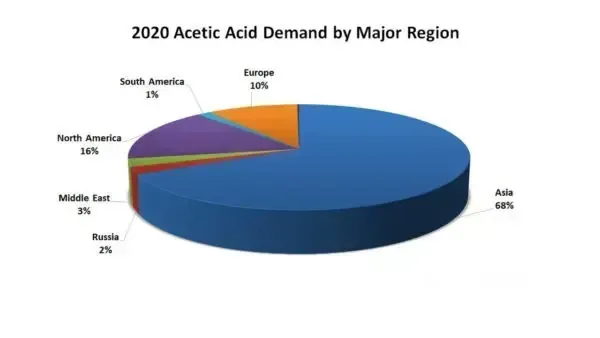
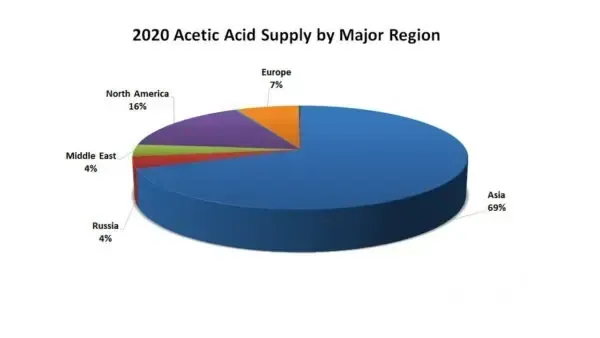
The charts below break down the regional distribution of acetic acid supply and demand. Asia, led by China, has provided the most demand growth for acetic acid in recent history. This is particularly the case for TPA, as China has been adding significant polyester production capacity to meet rapidly growing demand associated with its WTO participation and is investing upstream in new TPA capacity. Additionally, acetate esters (oxygenated solvents) are growing in China as reductions in chlorinated and hydrocarbon solvents are enacted. Outside Asia, demand growth has been much more moderate, ranging from flat to slightly positive.


2020 Acedic Acid Demand by Major Region

Methanol_blog

2020 Acedic Acid Supply by Major Region

Recent insights

European jet tightness was an early Energy Aspects call
April 28, 2026
Energy Aspects called Europe’s jet fuel tightness early, tracking falling Middle East flows, lower ARA stocks and limited replacement barrels through Q2 26.
The product crisis building behind the crude headlines
April 27, 2026
Global refined product shortage: Energy Aspects explains why jet fuel, diesel and gasoline deficits are underpriced and when the West will feel the impact.
Webinar on North American gas and power outlook: summer gas balances, Permian supply, LNG, PJM
April 23, 2026
Watch EA’s webinar on North American gas and power markets, covering Lower 48 supply, LNG feedgas, gas burn, and PJM/ERCOT pricing trends.