

The central bank of oil: China emerges as market solver
July 10, 2026
The market is slowly abandoning the binary Hormuz recovery paradigm but has yet to price the unwinding of the coping mechanisms that have softened the disruption’s impact on energy markets.
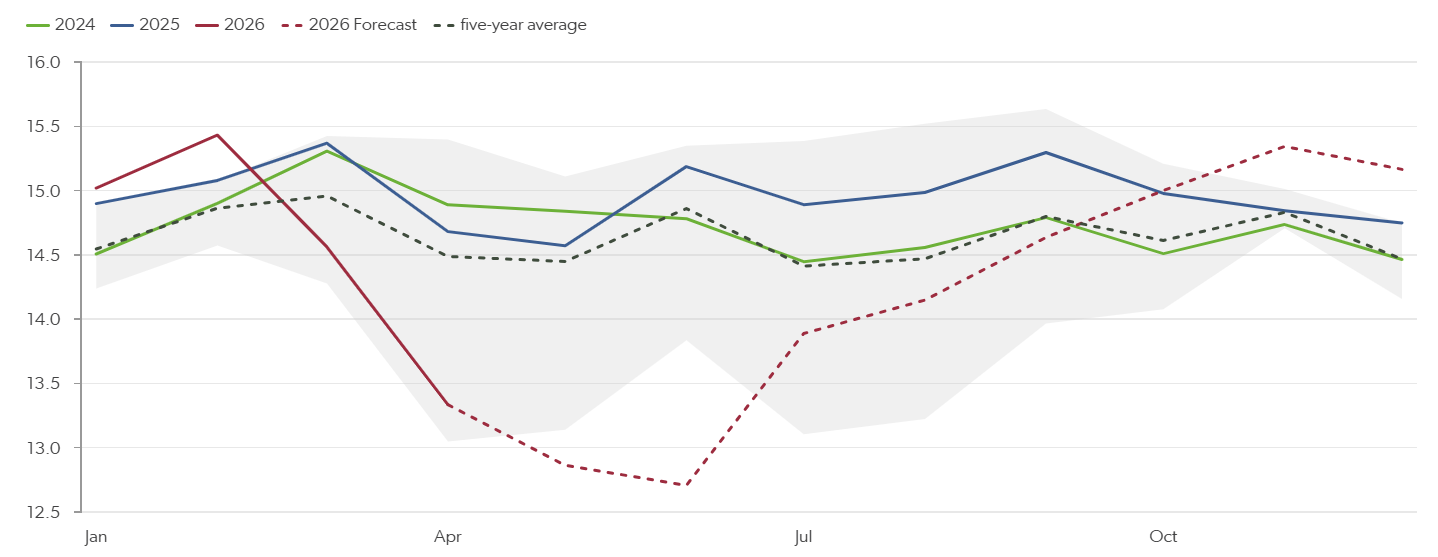
The most significant adjustments have come from China. By cutting crude imports, slashing refinery runs, halting strategic reserve filling, curtailing product exports and pivoting refiners from petrochemicals to transport fuels, Beijing has bought the market precious time as the disruption hits 100 days.
But this support will begin to ebb as runs recover over the summer.
Whether Hormuz transit recovers in time to avoid stockouts is far from clear. Tit-for-tat strikes between Iran and Israel have not derailed the ceasefire following US President Donald Trump's intervention, but US–Iran MoU negotiations remain at an impasse.
Chinese refinery runs, mb/d

Source: NBS, Energy Aspects
Oil
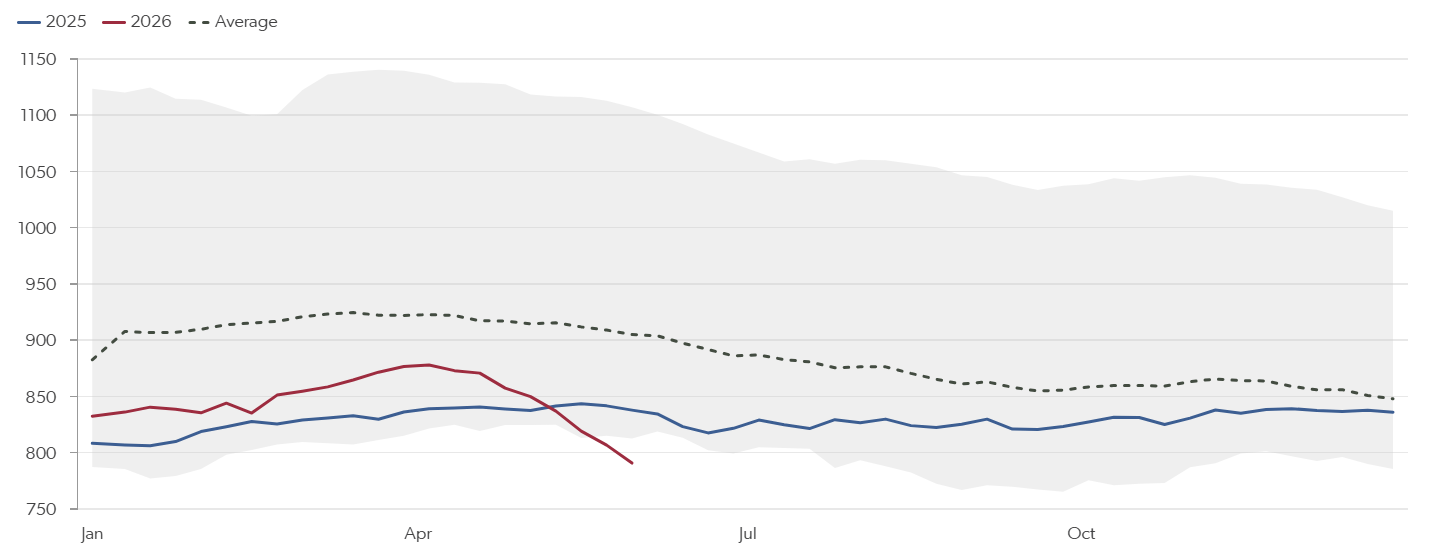
US inventory draws look unsustainable. PADD 3 stocks are on track to hit critically low levels by end-August if current prices hold, with summer balances remaining tight even after accounting for unawarded SPR volumes. The government may be forced to act ahead of 4 July to avert a stockout. Cushing is also approaching critical levels at which the WTI–Brent prompt spread has historically widened.
Chinese refinery runs, mb/d

Source: Insights global, Energy Aspects
Gas, power and AI
TTF and JKM moved higher last week, with JKM–TTF spreads widening on hotter Asian weather, strike action in Australia and continued Hormuz uncertainty. In Europe, hotter summer trends amplify H2 26 TTF upside if Middle Eastern supply disruptions persist. Henry Hub retreated but remains supported by returning LNG maintenance cargoes.
Cumulative Asia CDDs vs 10-year normal

Source: Various government statistics, Spire Weather, Energy Aspects
Macro
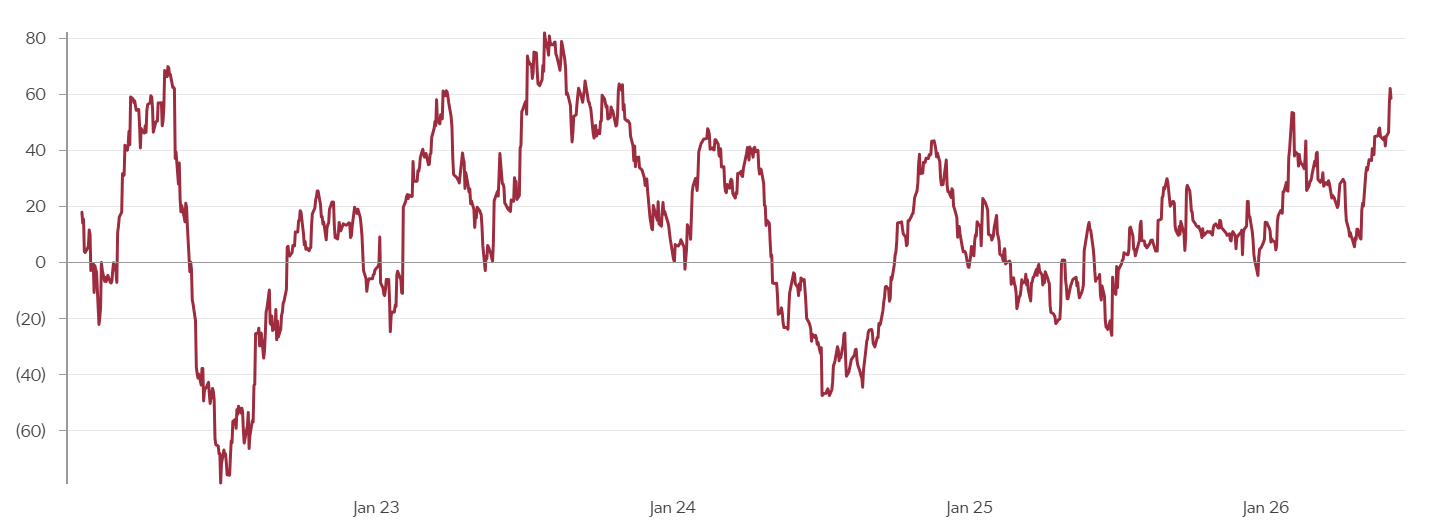
The longest positive run of US economic surprises since October 2024 continued last week. May payrolls beat the even the most bullish estimates, leaving new Fed Chair Warsh little room to turn dovish. If Hormuz transit remains disrupted into late summer, higher energy prices and US outperformance would likely push two-year yields through their 4.15% ceiling and support the dollar.
US economic surprise index

Source: CEIC, Citigroup, Energy Aspects