
From OilX to EA Analytics: The evolution of real-time energy intelligence
July 7, 2026
Written by
Dr Florian Thaler, Head of Analytics and Founder of OilX
A personal reflection on the evolution from OilX to EA Analytics and what it means for energy intelligence.
When we started OilX, we had one singular obsession - answering the question that kept oil traders awake at night. "What's happening in the oil market right now?"
It sounds simple, but it wasn't. For decades, traders relied on lagging indicators like weekly inventory reports, port observations, and broker rumours. By the time you knew something was happening, the market had already moved. We saw an opportunity to collapse that information lag using satellite imagery, maritime and mobility data to measure global oil supply and demand in real time. We called it nowcasting, and it became a tool that fundamentally changed how traders approached timeseries data in oil markets.
But as we grew and our clients grew with us, we began to hear a different question. It wasn't "what's happening now?" anymore. It was "what comes next?"
That tension between having actual real-time visibility and lacking the analytical depth to act on it set the stage for everything that followed.

The limits of a point solution
I'm proud of what OilX accomplished as an independent business. We pioneered nowcasting in energy markets, built a credible user base of sophisticated traders and analysts and proved that satellite-derived intelligence could be operationalised at scale in quantamental models. But I'll be honest, we hit a ceiling.
The traders we served needed more: they needed history to anchor reality, nowcasting to measure the present and forecasting to anticipate the future. The market needed a single source of truth across all three timescales - a framework we coined the trinity of timeseries data.
We also had a geographical and commodity problem. Everything we'd built was optimised for oil. Expanding that architecture to gas, LNG, power, and other energy commodities would have meant rebuilding from the ground up and we'd still lack the analytical depth to make sense of it all.
The convergence
That's when Energy Aspects (EA) approached us with a proposition that made immediate sense. EA had built something remarkable: years of expert research, proprietary methodologies for forecasting and deep relationships across the global energy sector. But they lacked what we had, namely real-time data infrastructure and a framework for nowcasting that could anchor their forward analysis in measured reality.
The conversation was refreshingly candid. Both sides saw the same destination, a unified platform where traders and analysts could access validated historical data, real-time measurement of current market dynamics and expert-backed forecasts - all seamlessly integrated, all in one place. EA needed our nowcasting muscles. We needed their analytical depth and commodity breadth. It wasn't a merger born from overlap; it was completion.
It is an entire proprietary intelligence layer powered by multiple types of satellite intelligence, machine learning, and proprietary algorithms. The vision became tangible: real-time feeds enriched with expert interpretation, anchored in satellite-verified ground truth and connected to forward-looking analysis. All in one ecosystem.


The reality of integration and building a frictionless experience
Challenge 1: Aligning ground truths
The first challenge was aligning ground truths. OilX had one source of truth built from satellite and AIS data. EA Analytics had another, built from market reporting, official statistics and expert interpretation. These didn't always agree, and reconciling them required humility from both sides. We had to ask difficult questions: Whose data is right? When they diverge, what does it tell us?
In many cases, the answer was that both were right in different ways - OilX was measuring physical flows, EA was measuring reported or transacted volumes. Understanding that distinction became critical to building credibility.
Challenge 2: Technical and organisational alignment
The second challenge was technical and organisational. Building an API that seamlessly serves historical time-series data, real-time nowcasting feeds, and quantitative forecasts to the same client wasn't just an engineering problem, it required alignment across teams with different working cultures and priorities. Data engineers had to work closely with research analysts. Product teams had to balance the needs of traders (who wanted speed) with the needs of strategists (who wanted depth). It took time, honest conversations, and a genuine commitment to get the user experience right.
Where the friction dissolves
But here's what I'm genuinely excited about: we did it. Our EA intelligence platform now allows a client to pivot seamlessly from an
analyst's note on geopolitical risk, to a real-time dashboard showing the physical impact of that risk, to a quantitative model forecasting the market consequence. That workflow used to require five different tools and two hours of manual integration. Now it's frictionless.
What we've built
EA Analytics isn't just about oil anymore. The nowcasting methodology we pioneered has been refined and applied across gas, LNG and power markets. The architecture is consistent with the same underlying principles, different domain expertise. Clients managing portfolio risk across multiple commodities now get methodological consistency alongside commodity-specific depth. That matters more than people realise.
The platform has also changed how we think about credibility. In energy markets, opinion is cheap. Data is cheaper. But measurement-backed analysis in the form of real-time observation grounded in satellite truth, connected to expert interpretation is rare and valuable.
That's what we're building. It's not data without context. It's not forecasts without measurement. It's intelligence - the combination of what's happening, what it means and what comes next.
What excites us now
Looking forward, the next chapter is about deepening our measurement capabilities through the integration of Kayrros across the platform. Kayrros brings unprecedented scale in satellite-derived measurements. We're talking about multiple data streams covering oil terminals, gas plants, power generation and even emissions. The volume of earth observation data we can now ingest, process, and activate at scale is transformative.
But data at scale without intelligence remains just noise. That's where AI comes in. We're actively exploring how advanced machine learning models can unlock patterns in our proprietary satellite datasets that were previously invisible. Imagine identifying supply constraints before they hit the market. Imagine quantifying the real-time impact of renewable transition on power markets. Imagine early warning systems for commodity shocks built on measured reality, not speculation.
This isn't science fiction. The infrastructure is in place. The data is there. The expertise exists across our teams. The work now is in execution, responsibly and rigorously ensuring that speed and innovation does not compromise credibility.
A personal reflection
Sometimes I think back to those early OilX days, when we were a small team convinced that satellite imagery could revolutionise energy markets. We were right about the potential, but incomplete in our vision. We needed partners who understood that nowcasting was the foundation, not the destination.
EA saw that from day one. They didn't acquire OilX to own our nowcasting; they acquired us to accelerate the vision of a unified intelligence platform. That distinction matters. It's why this integration has felt genuine and not like a consolidation, but like a convergence.
For clients and the market at large, it means something concrete: there's now a place where real-time energy intelligence meets expert analysis meets quantitative rigour. One platform. One source of truth. One less reason to toggle between five different windows looking for the signal in the noise.
The evolution from OilX to EA Analytics isn't an ending. It's the beginning.
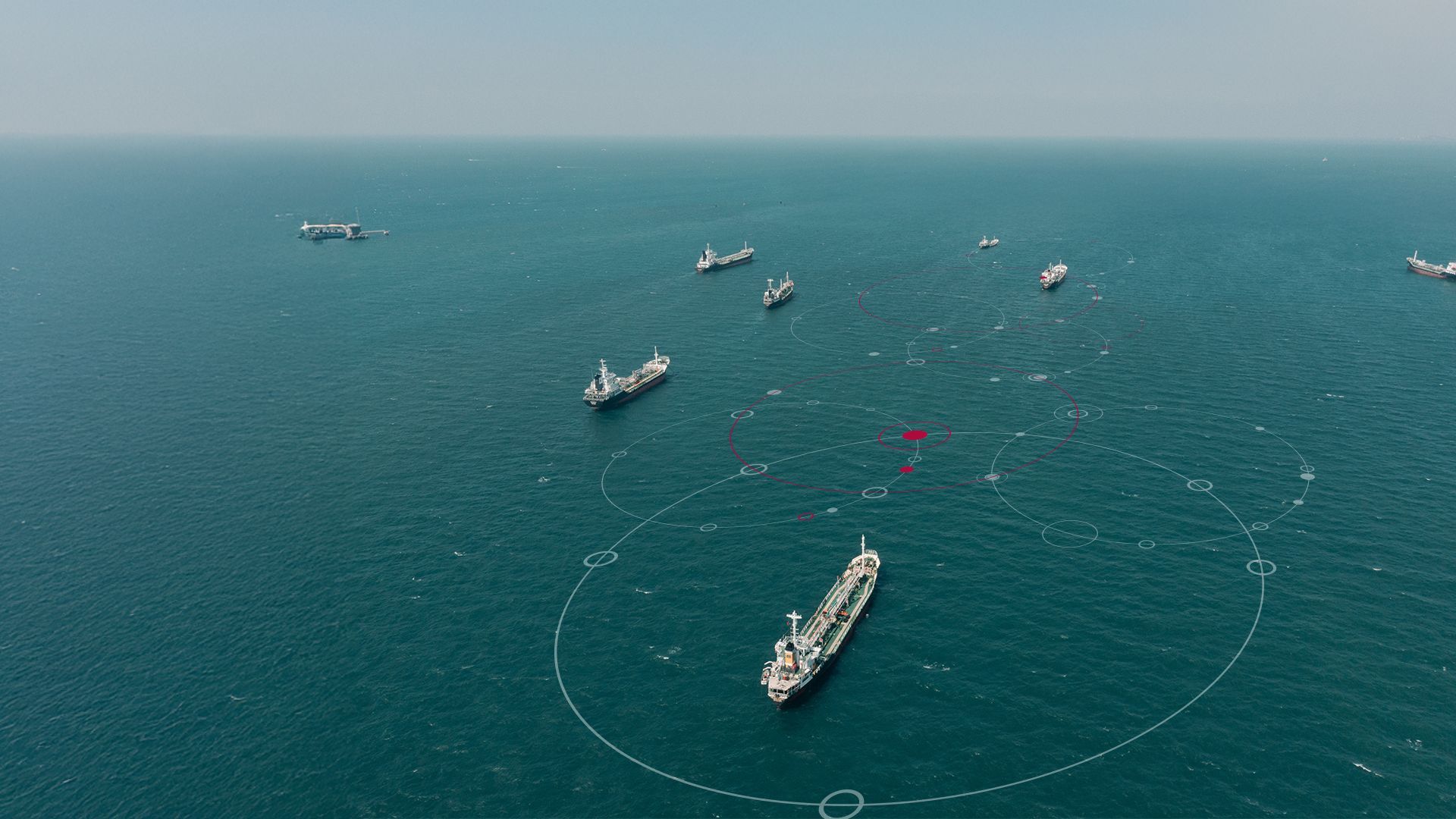
EA Analytics - Nowcasting
EA Analytics unlocks access to near real-time oil market data to help you combat increased speculative financial flows and optimise risk management.
Learn moreRecent Posts